
How to Eat Korean BBQ
Korean BBQ is a meal deeply loved in Korea and one that has captured attention far beyond its borders.
What began as a shared table tradition has become a global experience: the grill at the center, meat sizzling in real time, banchan filling the table, and everyone leaning in together.
Whether you’re discovering K-BBQ for the first time or looking to cook it with confidence, this guide covers the essentials from choosing the right cuts and grilling them correctly to wrapping each bite the Korean way.
What Is Korean BBQ?
Korean BBQ (gogi-gui) simply means “grilled meat,” but the experience is much more than that.
You pick your meats, cook them right at the table, share side dishes, wrap your meat in lettuce with sauces, and build each bite however you want.
It’s interactive, social, and honestly… kind of addictive.
How to Grill Meat the Korean Way
Choose the favorite parts
Most people think Korean BBQ is SSAM and a unique sauce, but it is not.
The real secret is knowing how to grill.
Here’s a simple system anyone can follow:
🥩 Beef
Short ribs (galbi)
Thin-sliced short ribs (LA galbi)
Ribeye (deungsim)
Brisket (chadolbagi)
Chuck flap (salchisal)
Sirloin (sirloin / chatae)
🐷Pork
Pork belly (samgyeopsal) -korean loves
Pork jowl (hangjeongsal)
Pork neck (moksal)
Pork ribs (dwaeji galbi)
When to Flip the Meat
Almost everyone flips too often.
For Korean BBQ, follow this rule: Let the meat release on its own.
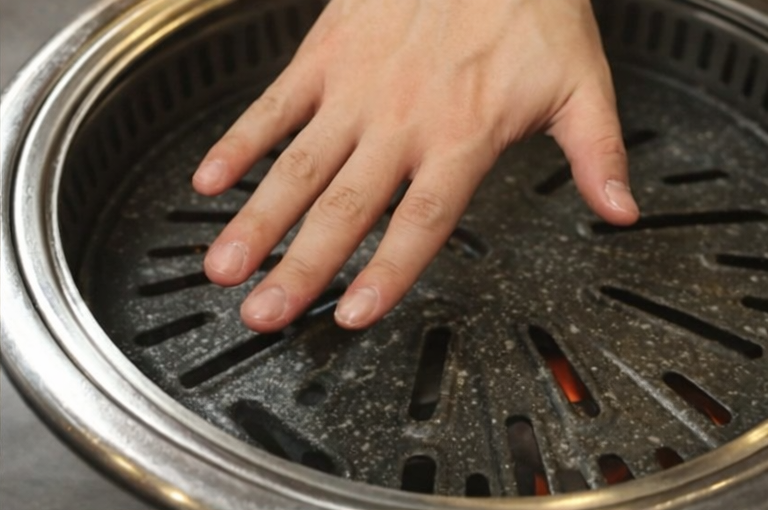
1. Check the grill temperature before placing the meat.
Korean-style grilling starts with high, steady heat.
If your pam is hot, it’s ready to grill it.
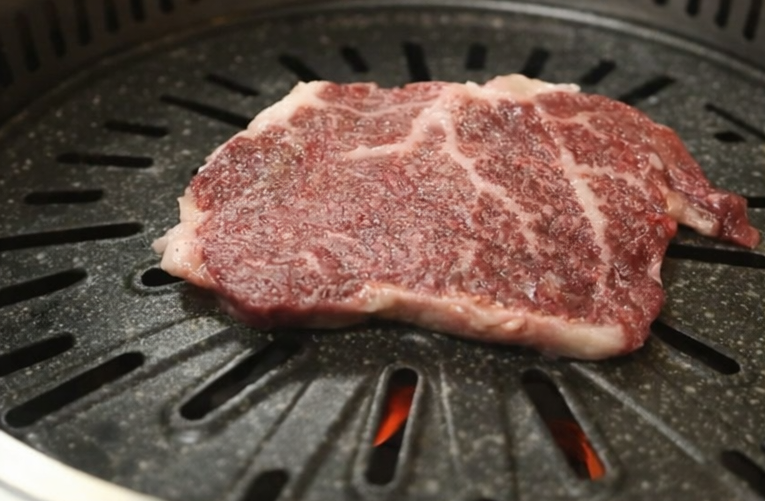
Place the beef on a fully heated grill and let it sear without touching.
Patience is needed to have perfect condition of beef,
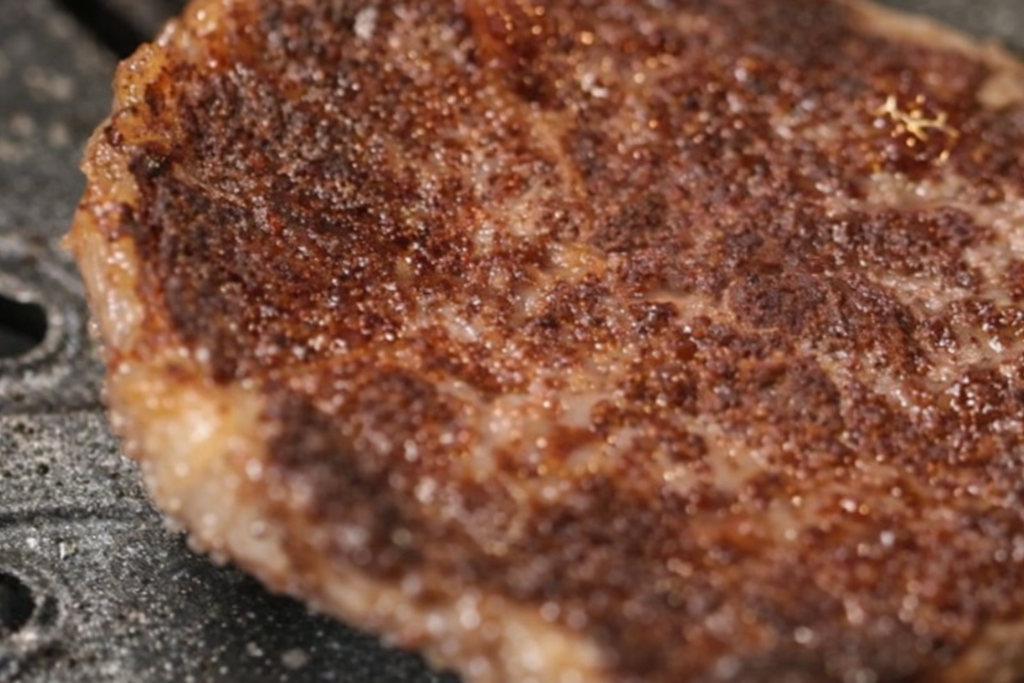
Flip when the underside turns lightly crisp and juices gently bead on the surface.
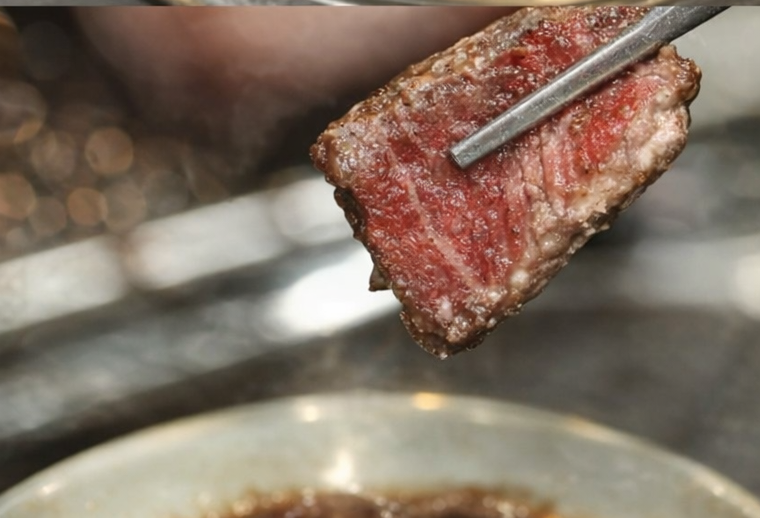
The meat is ready to enjoy!
The first bite is best enjoyed with nothing but a pinch of salt.
Avoid the Most Common Mistake
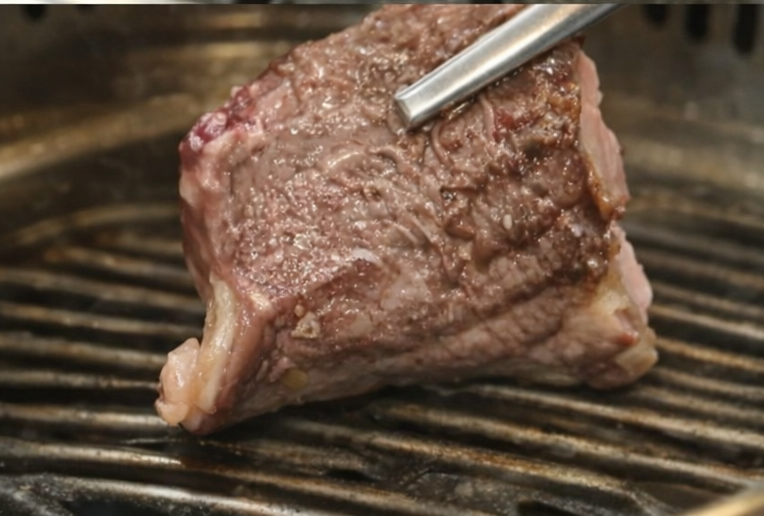
Do not flip the meat while the surface is still pale brown, and avoid pressing to keep the juices inside.
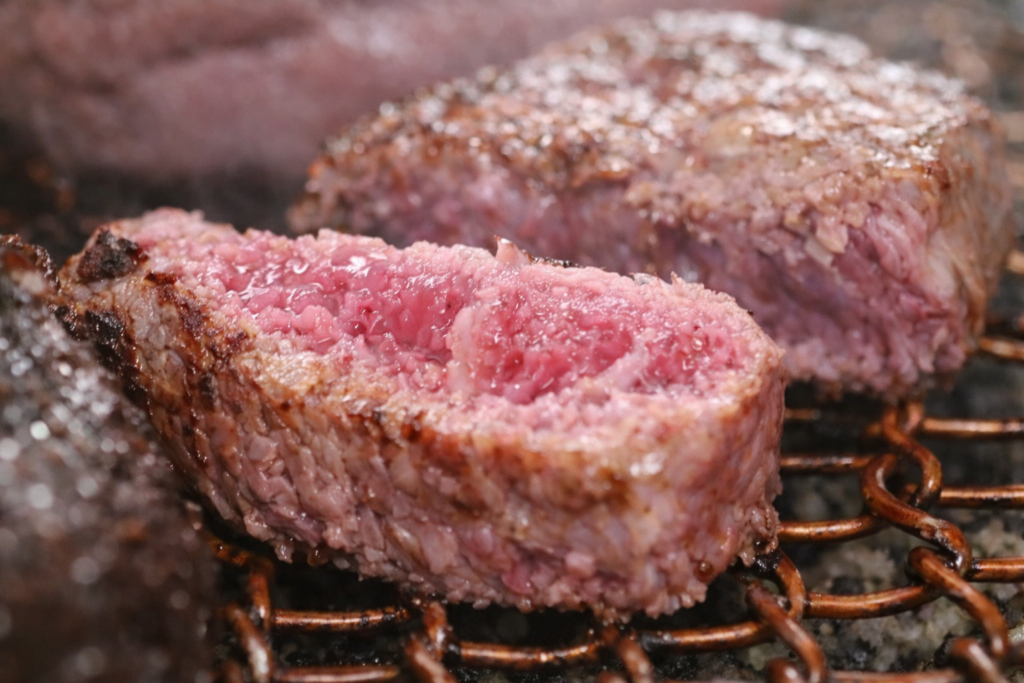
Cutting the meat too early allows the juices to escape, resulting in a drier bite.
How about pork?
Next, let’s talk about how to grill pork — especially pork belly, called samgyeopsal, which is an all-time favorite among Koreans.
If you read it, you can be master of grilling. It is not that much different from meat grilling.
LET’S GO FOR IT!!
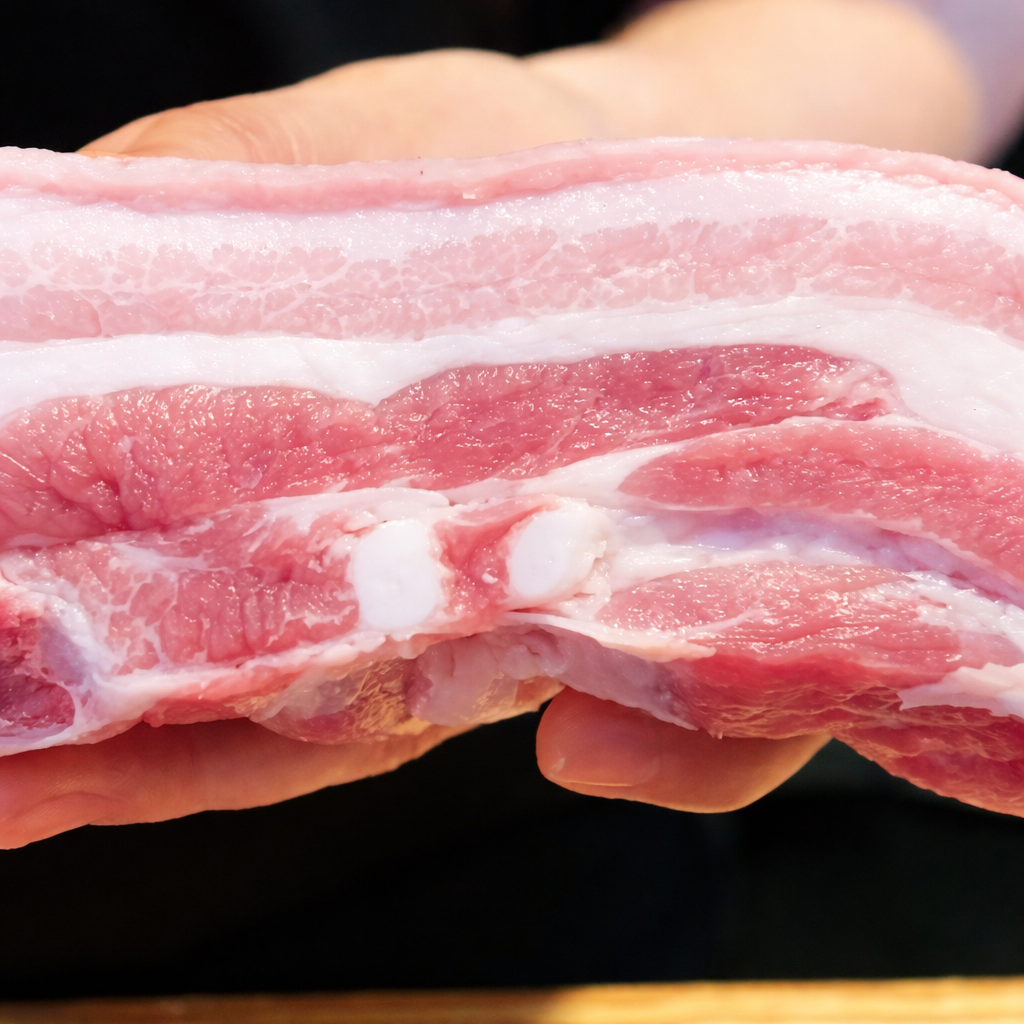
1. Choosing the pork belly
Bone-in pork belly is considered a better and more flavorful cut.
When ordering, choose pork belly with the bone attached for the best taste.
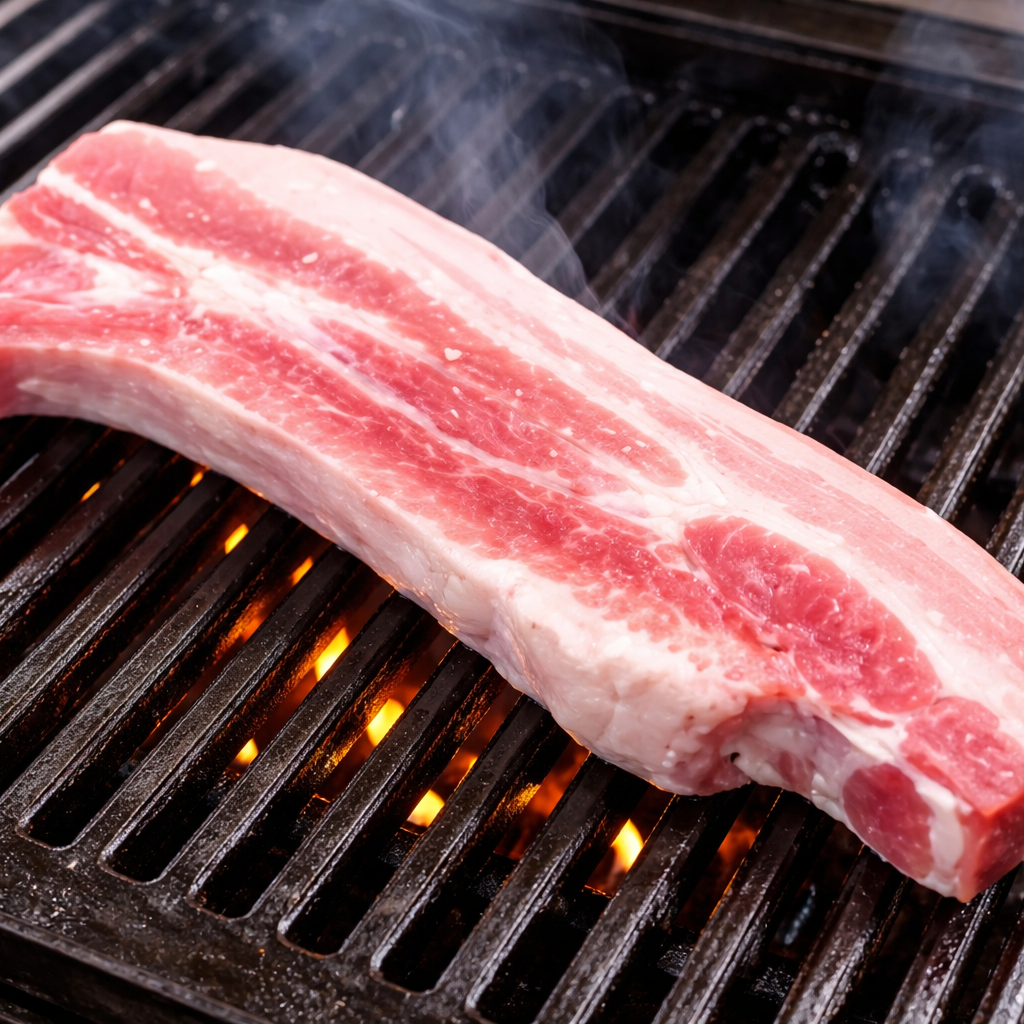
2. Preheating the grill
Before placing the meat on the grill, make sure the pan or grill is fully heated.
The ideal temperature for the Maillard reaction is around 175°C.
If it feels hot when you hold your hand about 10 cm above the grill, it’s ready.
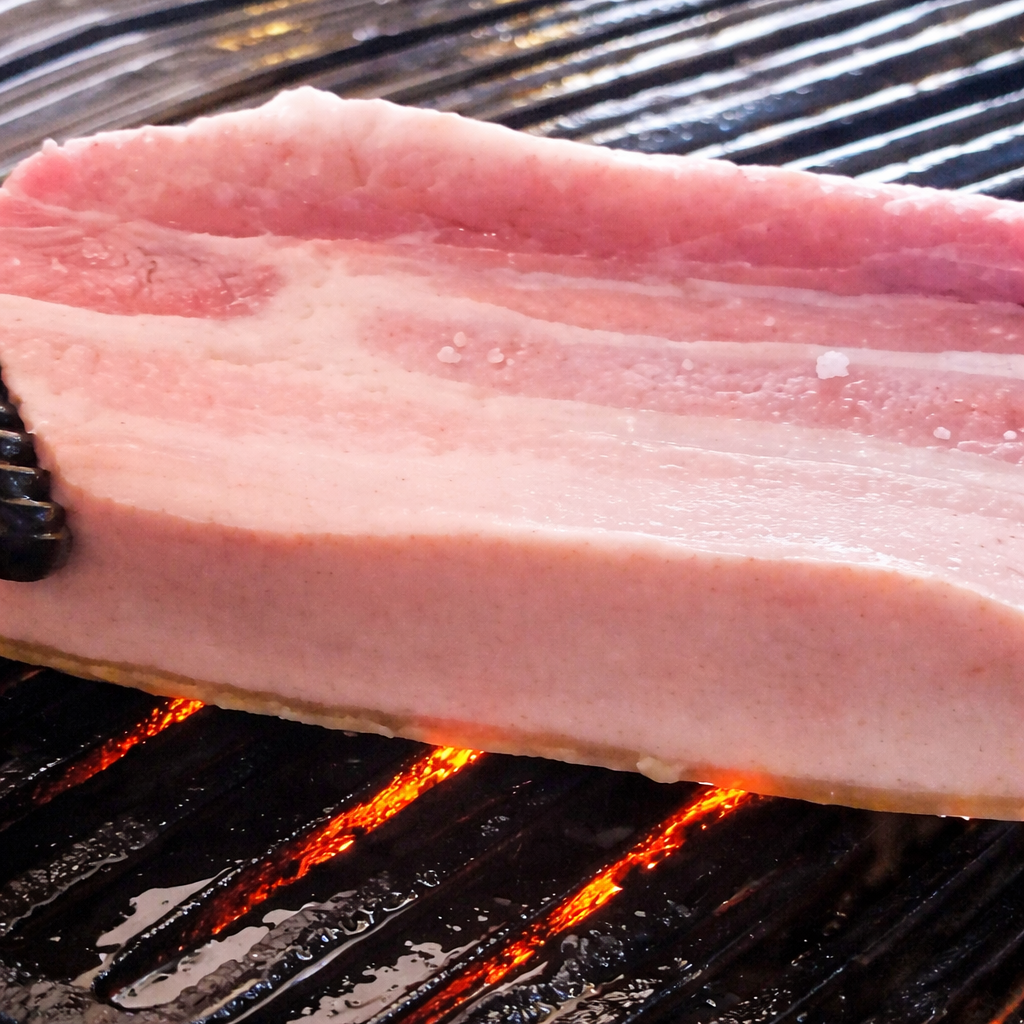
3. Flipping the first side
Flip the pork belly when about 1 mm of the underside has cooked.
If you’re unsure, wait until the bottom turns lightly golden brown.
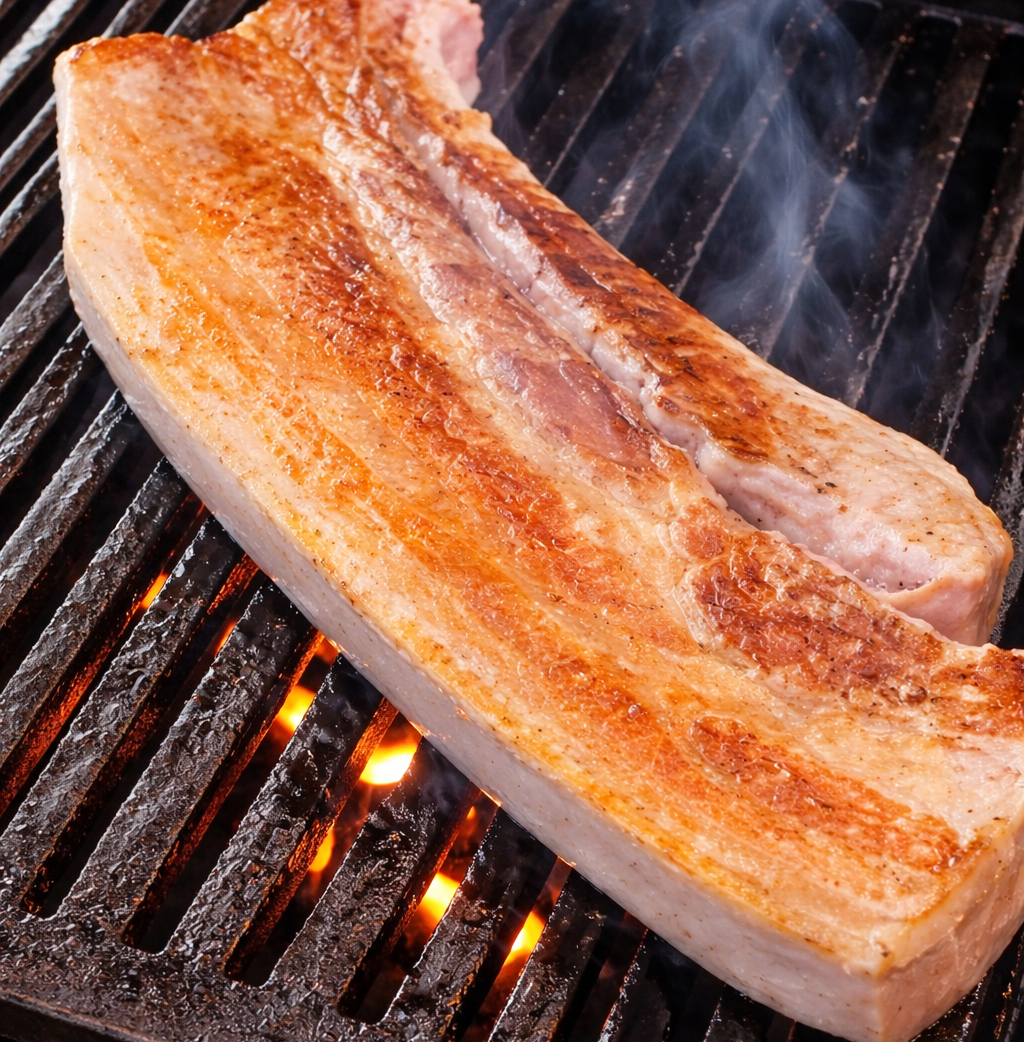
4. Searing evenly
Once the surface turns golden, flip and repeat on the other side.
Lightly sear the top and bottom edges as well.
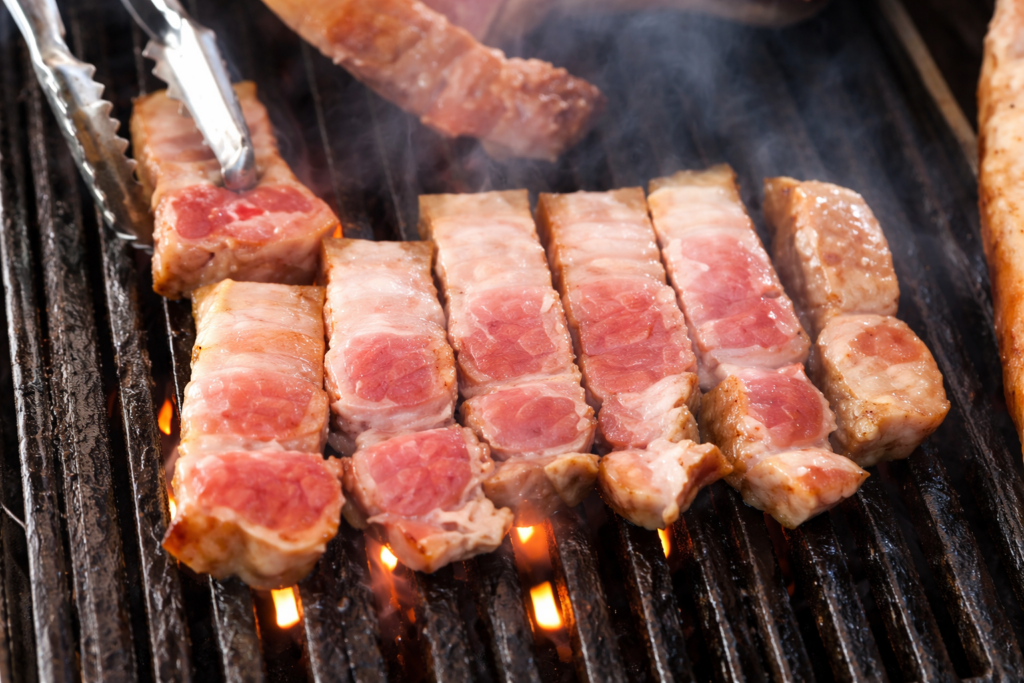
5. Cutting the meat
When all four sides are evenly browned, cut the pork belly.
You can slice it thin or thick depending on preference:
Thin slices for a crisp texture
Thick slices for a juicy texture
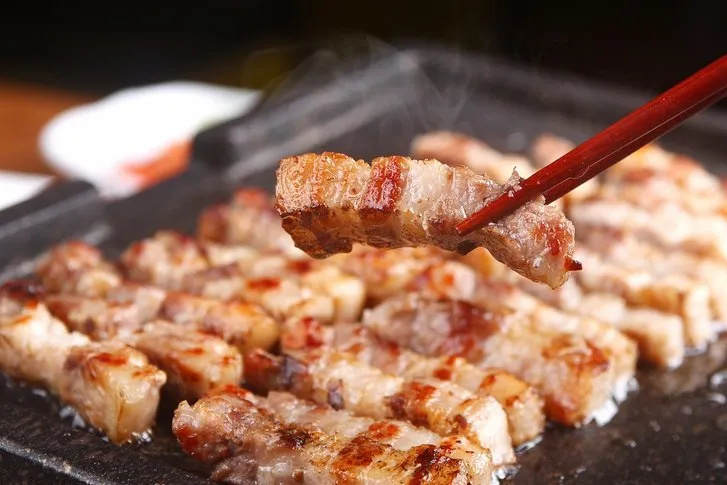
6. Finishing the cook
Turn the pieces and grill until the inside is fully cooked through.
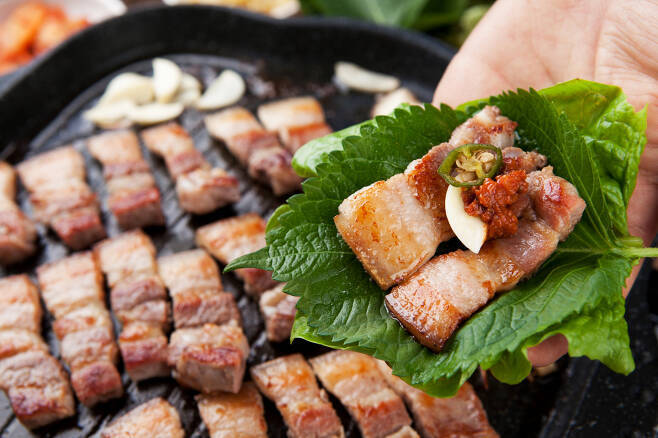
7. Time to enjoy
Start by tasting the pork belly with just a pinch of salt, like beef, to enjoy its natural flavor.
Then pair it with ssamjang and fresh vegetables if desired.
How to Wrap a Proper Korean Ssam
A ssam is a Korean lettuce wrap with ssamjang that completes a K-BBQ meal.
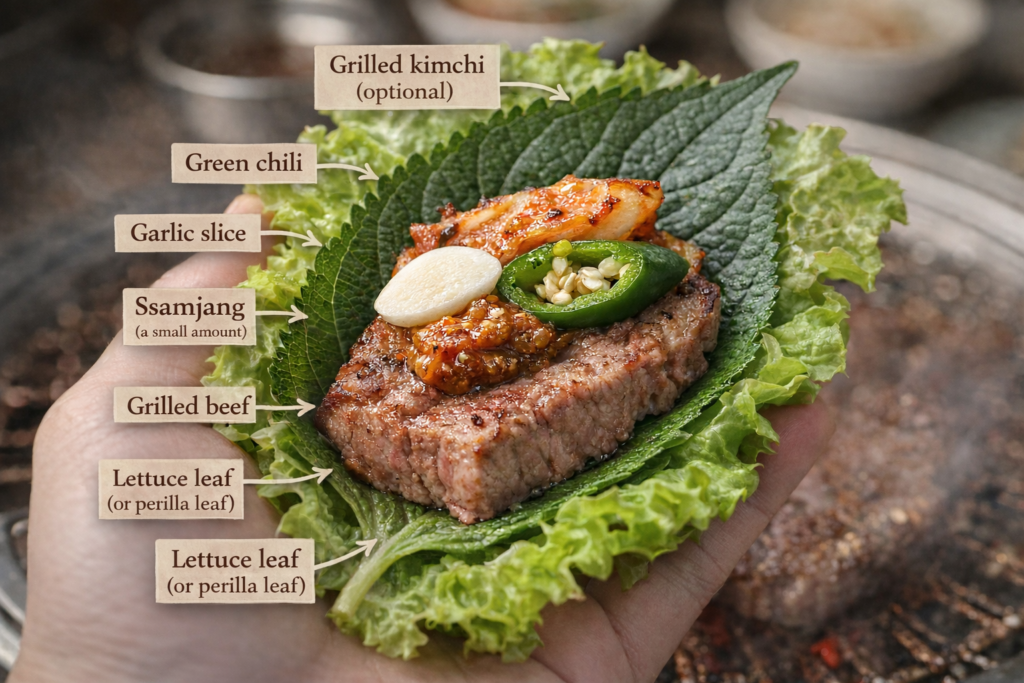
The basic formula
Take a lettuce leaf (or a perilla leaf).
Add one piece of grilled meat.
Add a small dab of ssamjang — never too much.
Optional but recommended:
a slice of garlic, green chili, or a bit of grilled kimchi
(grilled kimchi pairs especially well with pork belly).Fold.
Eat in one bite.
Tip: Ssam is about balance
Ssam is the contrast between fresh greens, rich meat, and bold condiments.
It’s not meant to be a giant burrito — if you can’t close it easily, it’s too big!”
FAQ — Beginner Questions
Q1: Do I need to use my hands?
Yes. Using your hands for ssam is completely normal and often preferred. Korean BBQ is casual, and wraps are meant to be eaten comfortably in one bite.
Q2: Is there a “correct” combination?
No. There’s no single right way to build a ssam. Korean BBQ encourages personal taste — adjust the balance of meat, greens, and condiments to what feels best for you.
Q3:Are there additional tips?
For contrast, many Koreans pair BBQ with cold naengmyeon or finish the meal with a warm stew like doenjang jjigae and a bowl of rice. This helps balance richness and round out the meal.
Q4:Are the side dishes (Banchan) free to refill?
Yes! One of the best parts of Korean BBQ is the “Banchan”—various side dishes like Kimchi, pickled vegetables, and salads that come with your meal. In most Korean restaurants in Vancouver, including WOORI, these are complimentary and refillable. They are designed to cleanse your palate between bites of rich, savory meat. (I’ll be sharing a more detailed guide on different types of Banchan in my next post, so stay tuned!)
Korean BBQ Etiquette
Shared Responsibility at the Korean BBQ Table
Korean BBQ is less about strict rules and more about shared responsibility at the table. Because everyone eats from the same grill, cooking becomes a group effort rather than an individual task.
When the grill is placed in front of you, it’s natural to take the lead — not as a server, but as someone looking out for the table. Turning meat at the right time, sharing evenly cooked pieces, and keeping the grill clear all help maintain a smooth rhythm.
Common Korean BBQ Etiquette Mistakes to Avoid
Overcrowding the grill is one of the most common beginner mistakes. Too much meat lowers the temperature and affects flavor, which is why Korean BBQ is cooked in small batches.
Using tongs for cooking and chopsticks for eating isn’t about formality — it’s practical. Separating utensils keeps things clean and allows everyone to enjoy the meal comfortably.
And if the grill gets too charred, it’s perfectly normal to ask for a fresh one. A clean grill isn’t a luxury; it’s part of the experience.
Enjoy Korean BBQ at WOORI in Vancouver
Vancouver is full of great Korean restaurants, but Korean BBQ hits differently on rainy days. The warmth of the grill, the aroma of sizzling meat, and a table filled with banchan turn a simple meal into a comforting experience.
At WOORI, Korean BBQ is served the traditional way — quality beef short ribs and pork belly grilled at the table, paired with fresh Korean-style banchan and clear, comforting soups like galbitang.
Whether you’re trying Korean BBQ for the first time or already obsessed, WOORI offers a cozy space to slow down, share food, and enjoy Korean flavors the way they’re meant to be enjoyed.
Ready to Try It?
Korean BBQ isn’t just food. it’s an experience built around sharing, grilling, wrapping, and enjoying the moment.
Now that you know how to choose your meats, grill them properly, and build the perfect ssam, you’re officially ready to eat like a local.